48 hr
Mekong Delta & Cai Rang Floating Market 2-Day Adventure
Discover riverside life, floating markets, and local culture on this immersive overnight journey through Vietnam's heartland.
Reserve
Hand-picked by our editors — only the best 5 experiences from 12 reviewed.
Verified partners for every tour, free cancellation where available, and instant confirmation on every booking.
48 hr
Discover riverside life, floating markets, and local culture on this immersive overnight journey through Vietnam's heartland.
Reserve
48 hr
Discover the vibrant heart of the Mekong Delta with overnight stay in Can Tho and early morning market visit
Reserve
48 hr
Explore peaceful waterways, visit Cai Rang Floating Market at dawn, and experience authentic Delta village life
ReservePrices from verified partners. Availability updates in real time at checkout. Free cancellation policies apply where shown.
The landmarks, rooms, and views travelers on this tour remember — all visible on a single visit.
The central hub of river trade where hundreds of boats gather daily to exchange produce.
Vendors hang seasonal fruit on poles to indicate their available inventory to passing buyers.
Small sampans serve traditional hot noodle soup as a breakfast staple to market traders.
The river serves as the primary thoroughfare for local commerce and community life.
Traditional wooden boats with hand-painted eyes are used to navigate the Mekong tributaries.
They complement each other; most visitors who do both call Cai Rang the more bustling experience while Phong Dien offers a more intimate setting for those booking mekong delta floating market from ho chi minh tours.
| Feature | Top pick Cai Rang | Phong Dien |
|---|---|---|
Market Size |
Large-scale wholesale | Small-scale local trade |
Tourist Density |
High density | Low density |
Typical Goods |
Wholesale agricultural produce | Household goods and groceries |
Boat Type Used |
Large motorized barges | Small hand-rowed sampans |
Accessibility from Ho Chi Minh City |
Accessible via 3-hour drive | Requires further boat transit |
Operational Focus |
Commercial logistics | Traditional community retail |
| See tickets → |
Verdict: Choose Cai Rang for the iconic mekong delta floating market from ho chi minh tour experience, or head to Phong Dien if you prefer a quieter, authentic glimpse into local riverside life without the heavy mekong delta floating market from ho chi minh tickets demand.
Choose your ticket, select your date, and reserve in under two minutes. Secure checkout handled by our verified partner.
Instant confirmation by email, with a mobile voucher you can save offline. No printing, no queuing at a collection desk.
Arrive at the entrance, show your voucher on your phone, and walk in. Most tickets include priority or skip-the-line access.
Practical details for your visit straight from our verified partners — hours, access, rules, and how to get there.
Hai Ba Trung Street, Tan An Ward, Can Tho
Primary departure point for Cai Rang tours
Direct transfer from Can Tho city center to the riverfront takes 10 minutes.
Private car transfers from Ho Chi Minh City take approximately 3.5 to 4 hours.
Dress modestly as a sign of respect when visiting regional markets. Lightweight, breathable fabrics are recommended for the Mekong Delta humidity.
Keep personal belongings secure in a crossbody bag while on the boat. There are no lockers at the Cai Rang Floating Market wharf.
Photography is permitted, but always ask vendors for permission before taking close-up portraits. Maintain balance on the boat while using equipment.
Navigating the market requires stepping from a wharf onto a small wooden boat. This experience may be difficult for travelers with limited mobility.
Children are welcome but must wear life jackets at all times on the water. Keep small children seated centrally within the boat.
Local vendors sell fresh coffee, noodle soups, and tropical fruits directly from their boats. Consumption is at the visitor's own risk regarding hygiene.
Hai Ba Trung Street, Tan An Ward, Can Tho
Primary departure point for Cai Rang tours
Get directionsBest time to go, insider tips, nearby landmarks, and the cancellation fine print — flip through to skim what matters to you.
How crowds, weather, and events shift across the year.
March to May brings warm weather and steady trade activity.
June to August sees the peak of the tropical fruit harvest.
September to November offers comfortable temperatures and lower rain chances.
December to February provides cooler morning air for market visits.
Small details that turn a good visit into a great one.
The best activity occurs between 05:30 and 08:00 before the heat intensifies.
Vendors hang goods on a long pole to advertise what they are selling.
Vendors rarely have large change, so keep 10,000 to 50,000 VND notes ready.
Keep phones and cameras in waterproof bags during the boat transit.
Use official wharf services to ensure safety standards are met for your Cai Rang tour.
Non-bookable sights within a short walk — free to visit, easy to pair.
The historic riverfront gathering area for local boats and market tours.
Features artifacts detailing the history and lifestyle of the Mekong Delta.
A preserved residence showcasing traditional architecture and French influences.
Flexible, no hidden fees.
Standard tour operator policies usually require 24-hour notice for a full refund. The entrance fee is 0 VND, so cancellations only impact the boat charter fee.
Hand-picked options within walking distance — pick a district for vibe, or a specific hotel for convenience.
Riverfront property offering serene views and traditional decor.
Convenient location near the city center and main transit points.
Located within walking distance of the primary wharf departure area.
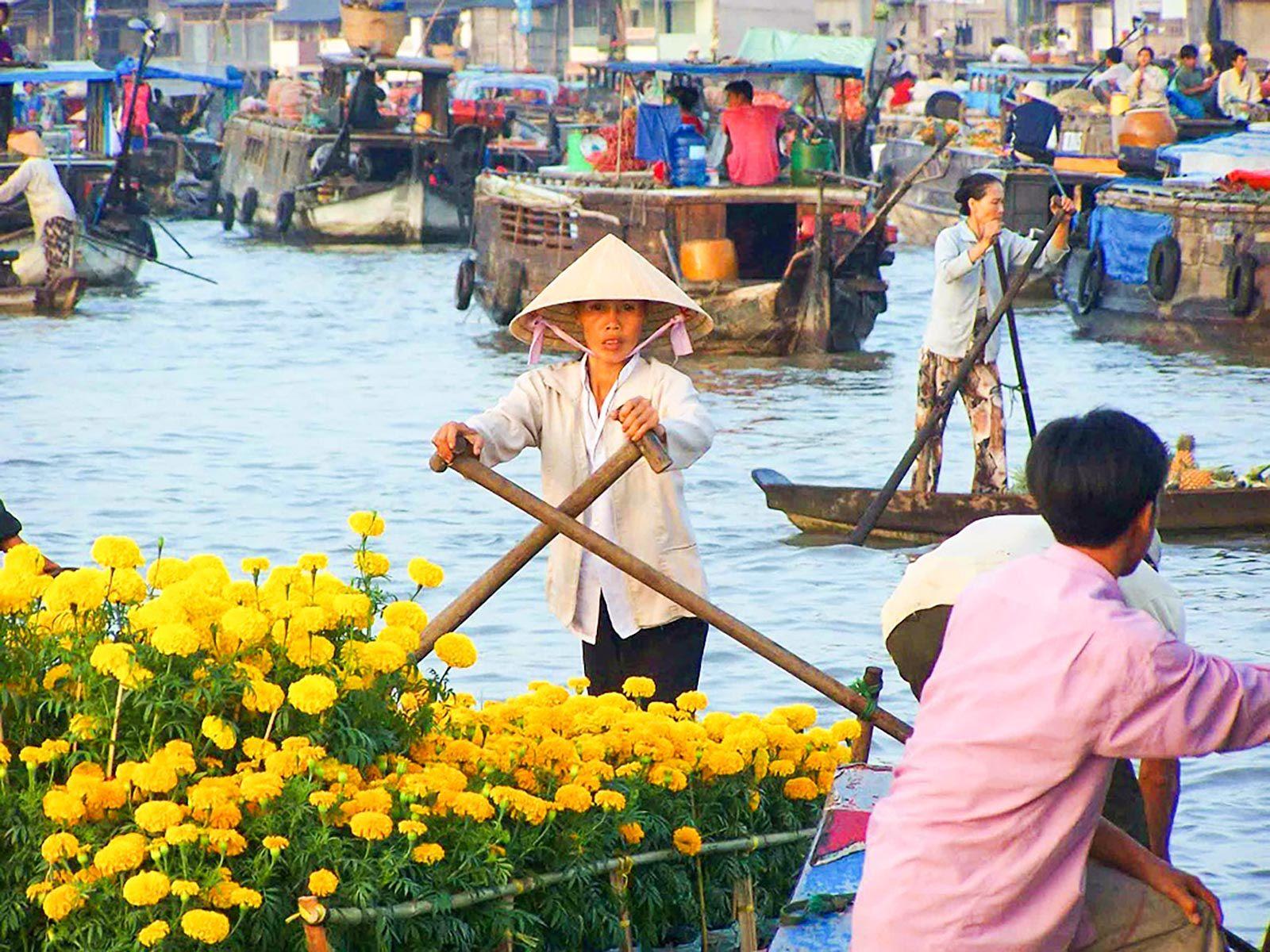
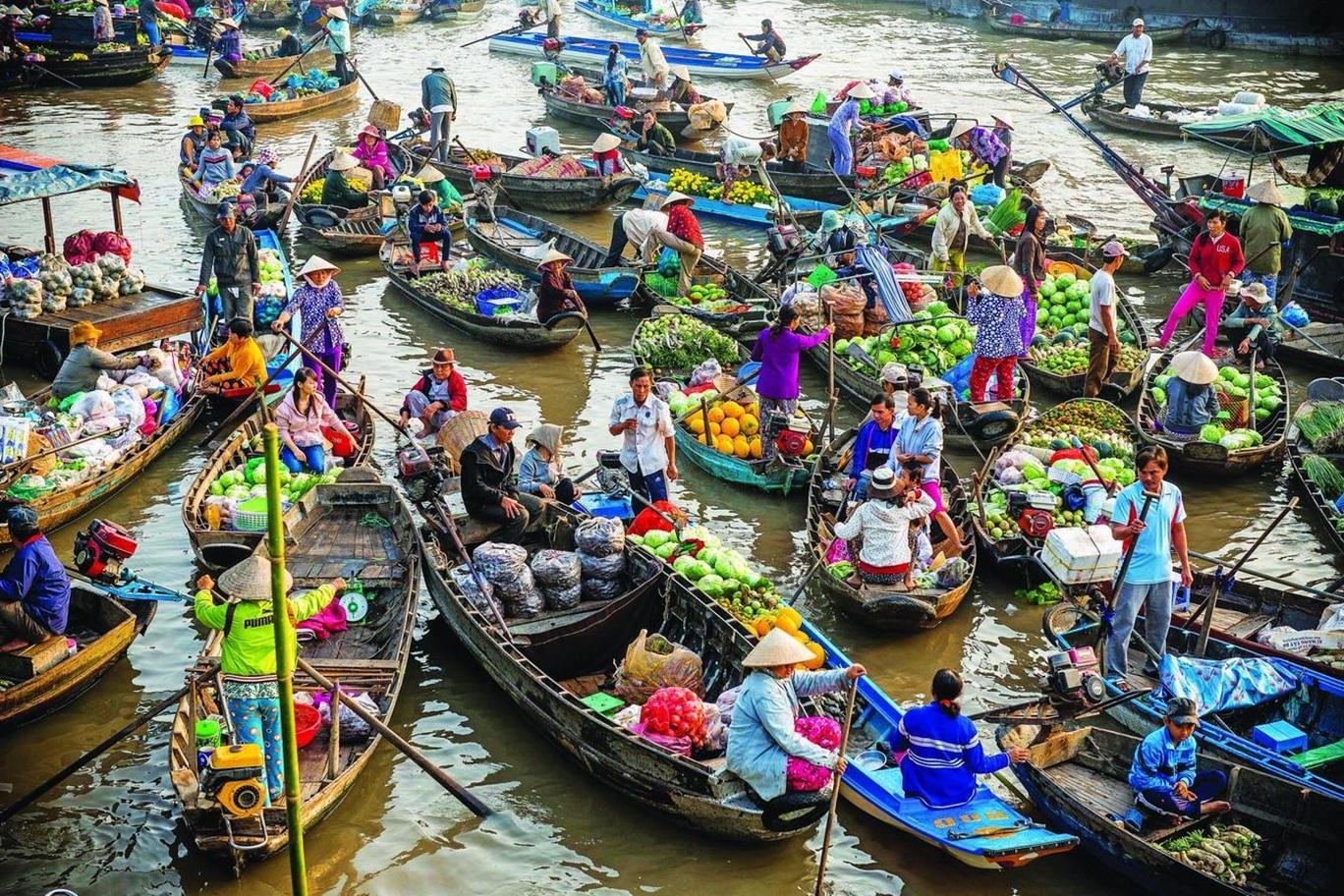
Cai Rang Floating Market operates on a 12-kilometre stretch of the Can Tho River where wholesale fruit and vegetable transactions have occurred since the early 20th century, carried out entirely from wooden sampans. Unlike Vietnam's smaller tourist-oriented floating markets, Cai Rang remains an active commercial hub where farmers from surrounding districts arrive before dawn to sell produce in bulk to retailers who distribute goods across the delta. The market's signature practice involves hanging sample goods — pineapples, dragon fruit, cabbage — on tall bamboo poles called cây beo, visible from hundreds of metres away, allowing buyers to identify sellers without verbal negotiation. At peak activity between 5:30 and 8:00 AM, more than 400 boats cluster in channels marked by these vertical flags, creating a floating bazaar that predates road infrastructure in this region. The mekong delta floating market from ho chi minh journey follows Highway 1A southwest for 169 kilometres to Can Tho, the delta's administrative capital and the nearest city to Cai Rang. Can Tho's Ninh Kieu Wharf serves as the departure point for motorised wooden boats that navigate tributaries and irrigation canals to reach the trading zone. The market occupies a deep-water section of the Can Tho River chosen for its consistent current and proximity to orchard districts in Phong Dien and Thot Not. French colonial records from 1910 reference river commerce at this location, though the modern market's structure took shape after 1975 when cooperative farming expanded regional fruit production. Today the site functions as both working market and cultural landmark, with tourism boats circling the perimeter while commercial transactions continue uninterrupted at the centre. Cai Rang's architectural vocabulary consists of the boats themselves — ranging from 6-metre family sampans to 15-metre wholesale vessels fitted with diesel engines and canvas awnings. Sellers live aboard for market days, cooking breakfast on portable stoves and storing unsold inventory in holds below deck. The absence of fixed stalls or permanent structures reflects the delta's monsoon geography, where water levels fluctuate by two metres seasonally. Smaller boats ferry coffee, noodle soup, and bánh mì to market workers, creating a floating restaurant network that operates independently of shore facilities. The market's persistence into the 21st century, despite improved road networks and refrigerated transport, demonstrates the delta's continued reliance on river-based distribution systems that colonial-era infrastructure never fully replaced.
"The market's signature practice involves hanging sample goods on tall bamboo poles called cây beo, visible from hundreds of metres away."
A step-by-step walkthrough of the visit — what you'll see, how long each stage takes, and the details that matter.
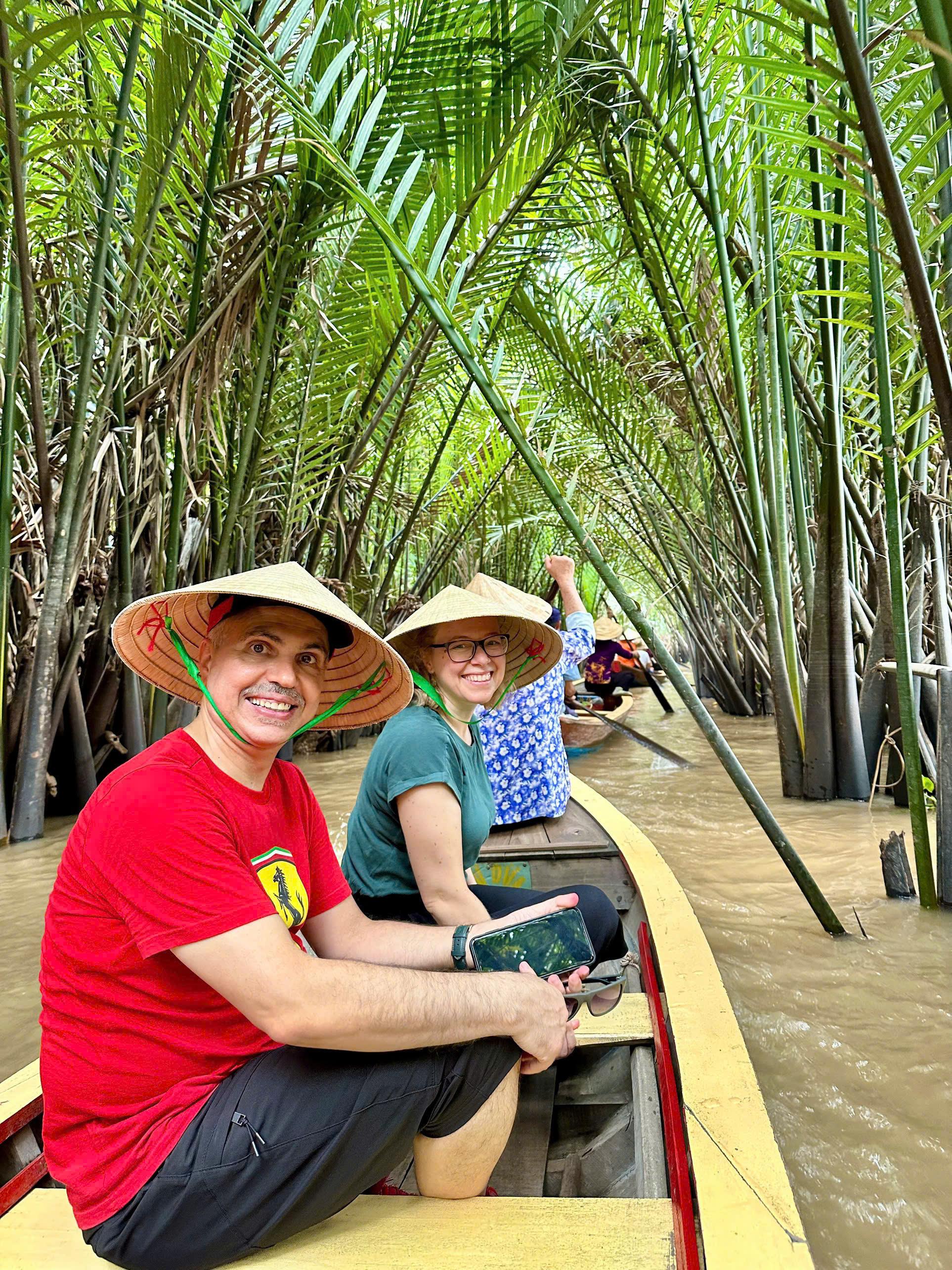
You depart Can Tho's Ninh Kieu Wharf at 5:30 AM aboard a wooden riverboat, the sky still grey above the Can Tho River's dark water. Your guide steers through narrow irrigation canals lined with water palms, passing houses on stilts where kitchen lights flicker on. Twenty minutes downstream, the first cây beo poles appear — bamboo masts hung with pineapples and pomelos rising above the morning mist. You enter the market's core where 300 boats cluster in organised chaos, diesel engines idling while wholesalers shout negotiations in Vietnamese across the gaps between hulls. Your boat drifts between vendors as the sun breaks the horizon, illuminating stacks of dragon fruit, watermelon, and cabbage piled waist-high on decks. A coffee seller pulls alongside, handing you a cup of cà phê sữa đá through the window without docking. You watch a transaction unfold in silence — a retailer pointing at a pole-mounted jackfruit, the seller nodding, a teenage son transferring crates between boats using a wooden plank as a bridge. By 7:00 AM the market reaches peak density, the river surface hidden beneath overlapping sampans, and you navigate to the periphery where smaller boats sell bánh mì and noodle soup to the working crowd. The mekong delta floating market from ho chi minh tour typically includes two hours at Cai Rang before returning upstream, though the market continues trading until 9:00 AM when heat and depleted inventory send boats home.
The market operates daily from 05:00 to 18:00.
The entrance fee is 0 VND, as there is no cost for entry to this public river area.
The best arrival window is 05:30–08:00 for the most vibrant activity at the Cai Rang Floating Market.
No tickets are required for entry, though you will pay for your private or group boat rental.
You can reach the area via private car or bus from Ho Chi Minh City to Can Tho City, then charter a boat.
Yes, families are welcome, but children should wear life jackets at all times.
Cancellations are managed by your tour operator; check your booking confirmation for specific refund windows.
Photography is allowed, though visitors should be respectful and ask vendors before capturing portraits.
You can book mekong delta floating market from ho chi minh tours through local agents or online platforms that manage boat charters.